A ZIP code seems like a reasonable starting point for a public records search. You know where someone lives, or where a property is located, and you want to find the right records. The problem is that ZIP codes are postal boundaries — they were designed for mail delivery, not government record-keeping. No public records office organizes its files by ZIP code.
ZIP codes are often used as a starting point in public records searches, but they do not correspond to how government agencies organize records. That doesn’t mean a ZIP code is useless — it just means you need to convert it into something the right government office will actually recognize: a county, a municipality, or a specific jurisdiction. This guide walks you through exactly how to do that.
Quick Answer
ZIP codes don’t map directly to public records systems. To start a search using only a ZIP code:
- Convert the ZIP code to a county using a free lookup tool
- Identify which county office holds the record type you need
- Search that county’s official portal or contact the office directly
⚠️ Some ZIP codes span multiple counties. Always verify the county before searching.
When to Use a ZIP Code for Records Searches
Use a ZIP code as a starting point when:
- You only know a general location and need to identify the right jurisdiction
- You have a mailing address but don’t know which county it falls in
- You are trying to find the correct office for property or court records
- You are narrowing down where to search across multiple possible counties
The Correct Search Flow
When starting with only a ZIP code, follow this order every time:
- ZIP code → identify city and state
- City and state → identify the county
- County → locate the correct agency for your record type
- Agency → search the official records portal directly
Skipping any of these steps — especially step 2 — is what leads most searches to the wrong office or the wrong jurisdiction entirely.
How ZIP Codes vs. Jurisdictions Work
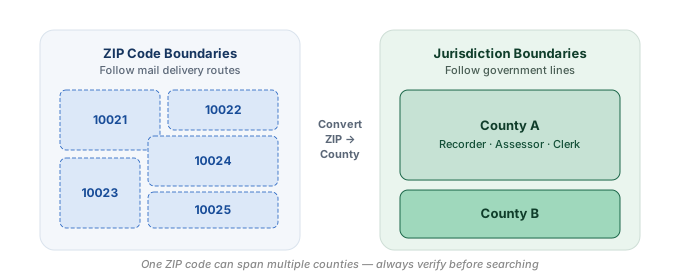
ZIP codes follow mail delivery routes. Public records follow government boundaries. These two systems do not align, which is why a ZIP code must always be converted into a jurisdiction before you can search effectively.
Why ZIP Codes Don’t Work for Records Searches
The United States Postal Service created ZIP codes in 1963 to sort and route mail efficiently. They follow carrier routes, not political boundaries. A single ZIP code can cross county lines, city limits, and even state borders in rare cases. A single county can contain dozens of ZIP codes.
Public records — property deeds, court filings, tax assessments, marriage licenses — are organized by the government jurisdiction that created them. That jurisdiction is almost always a county, a municipality, or a state agency. None of these agencies index their records by ZIP code, which means searching by ZIP alone will either return nothing or lead you to the wrong office entirely.
The fix is straightforward: convert the ZIP code to a county first, then proceed from there.
Step 1: Convert the ZIP Code to a County
Several free tools let you look up which county or counties a ZIP code falls in:
- USPS ZIP Code Lookup (usps.com) — confirms city and state for a ZIP, useful as a starting point
- Census Bureau Geocoder (geocoder.census.gov) — converts addresses or ZIP codes to FIPS codes, counties, and census tracts
- UnitedStatesZipCodes.org — shows the county or counties associated with a ZIP code, flags multi-county ZIPs
- Google Maps — searching a ZIP code will show you the general area; zooming in lets you visually confirm county boundaries
If the ZIP code spans more than one county, note all of them. You may need to search multiple county systems depending on what you’re looking for.
Step 2: Identify the Right County Office
Once you have the county, the next step depends on the type of record you need. Different offices maintain different records — and knowing which one to contact saves significant time.
Property records are maintained by the county recorder, register of deeds, or assessor’s office. Search the county name plus “recorder” or “assessor” to find the right portal. Most counties have online parcel search tools that let you search by address, owner name, or parcel number.
Court records — civil, criminal, probate, and family court filings — are held by the county clerk or clerk of courts. Many counties have online case search portals. If not, you may need to contact the clerk’s office directly or visit in person.
Tax records are typically maintained by the county assessor or tax collector. These are often searchable online and include ownership history, assessed value, and tax payment status.
Marriage and divorce records vary by state. In some states they’re held at the county level by the clerk of courts or register of deeds. In others, they’re centralized at the state vital records office. Check your state’s vital records agency if the county clerk doesn’t have them.
Criminal records and voter registration are usually maintained at the state level, though local court filings may be searchable through the county clerk’s portal as well.
Step 3: Search the County’s Official Portal
Most county offices now have some form of online search, though the quality varies significantly. Larger, more urban counties tend to have robust portals with free online access. Smaller or more rural counties may have limited online records or require in-person visits.
To find a county’s official records portal, search for:
[County name] + [state] + “property records” or “court records” or “public records”
Look for URLs ending in .gov — these are official government sites. Be cautious of third-party aggregator sites that appear in results and charge fees for records that are available for free through the official source.
Once you’re on the right county portal, search by address, parcel number, or owner name rather than ZIP code. These identifiers will return accurate results; ZIP codes usually won’t.
When a ZIP Code Spans Multiple Counties
This is more common than most people expect. ZIP codes like 20588 (which covers parts of Maryland and Washington D.C.) or rural ZIP codes that cross county lines can create genuine ambiguity about which jurisdiction holds a given record.
If you’re not sure which county applies to a specific address within a ZIP code, use the Census Bureau Geocoder with the full street address rather than just the ZIP. A full address will return an exact county match. From there, proceed to that county’s official records portal.
For property records specifically, the county where the property is physically located is always the correct jurisdiction — regardless of which county or city the mailing address might suggest.
Common Mistake
The most common mistake when starting a ZIP-based search is using a third-party people-search or background check site that accepts ZIP codes as input. These sites aggregate data from multiple sources, charge fees, and often return incomplete or outdated information. This leads to incorrect jurisdictions, missed records, and reliance on incomplete data. The same records — property ownership, court filings, tax data — are available for free through the official county or state portal once you identify the right jurisdiction.
The Bottom Line
A ZIP code is a useful starting point, not a destination. Convert it to a county, identify the right office for the record type you need, and search that office’s official portal directly. That process works reliably across all 50 states and eliminates the guesswork that leads most people to the wrong source.
Use the guides below to continue your search using official government sources and verified jurisdiction-based systems:
- → How to Search Property Records
- → How to Check Court Records
- → How to Look Up Property Ownership
- → How to Find Criminal Records
- → Search by State
PublicRecordResources.com is an educational resource. We are not a government agency and do not provide consumer reports or background check services.